Play Whack-A-Mole Online Free
Test your reflexes by striking emerging targets before they retreat.
Loading game...
About Whack-A-Mole
Welcome to Whack-A-Mole, our digital tribute to the beloved carnival game of speed and coordination! Originally popular on midways and in shopping malls, this game challenges you to click or tap the moles as they emerge randomly from their holes. Each successful hit scores you points, which are immediately sent to the live stats bar at the top of the screen. The speed of the game increases as moles pop up faster, and you must maintain high accuracy to secure a new high score.
Click the start button to kick off a 30-second round, and push your reaction time to the limits. The game is designed to test your hand-eye coordination under pressure, requiring rapid reflexes to hit the moles before they hide again. Try to lock in a new high score, track your progress, and enjoy this simple yet addictive challenge.
How to Play
Start the Timer
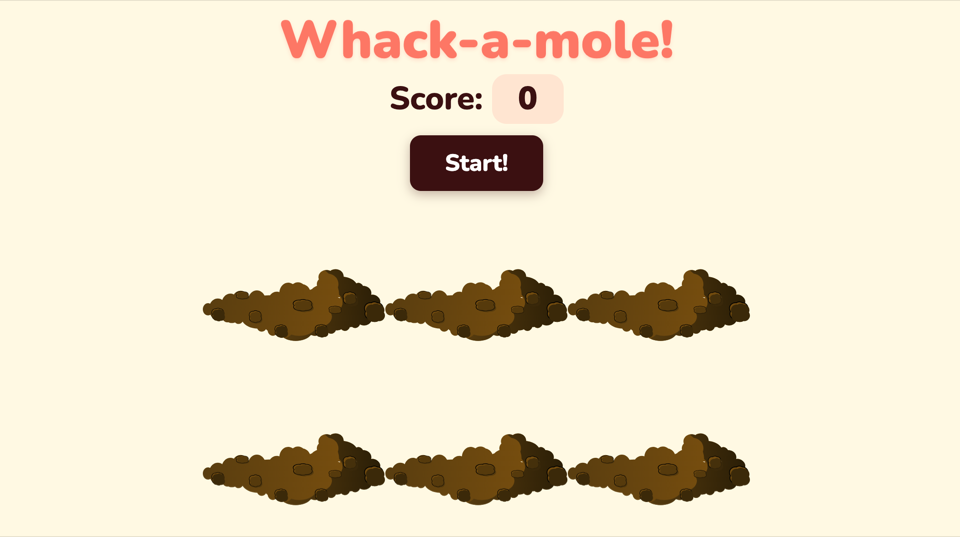
Click the Start button at the center of the board to begin the game. A 30-second countdown timer will start ticking down immediately in the top stats bar.
Spot the Moles
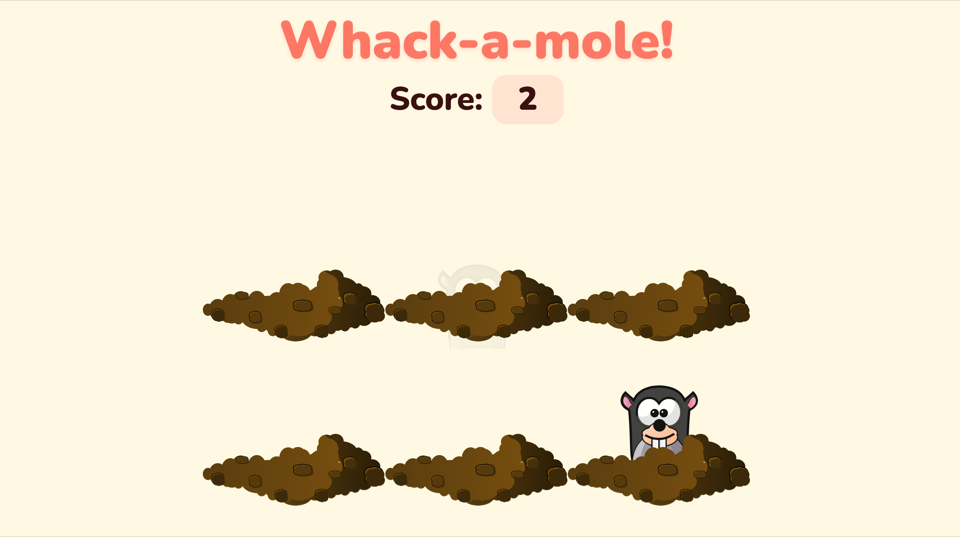
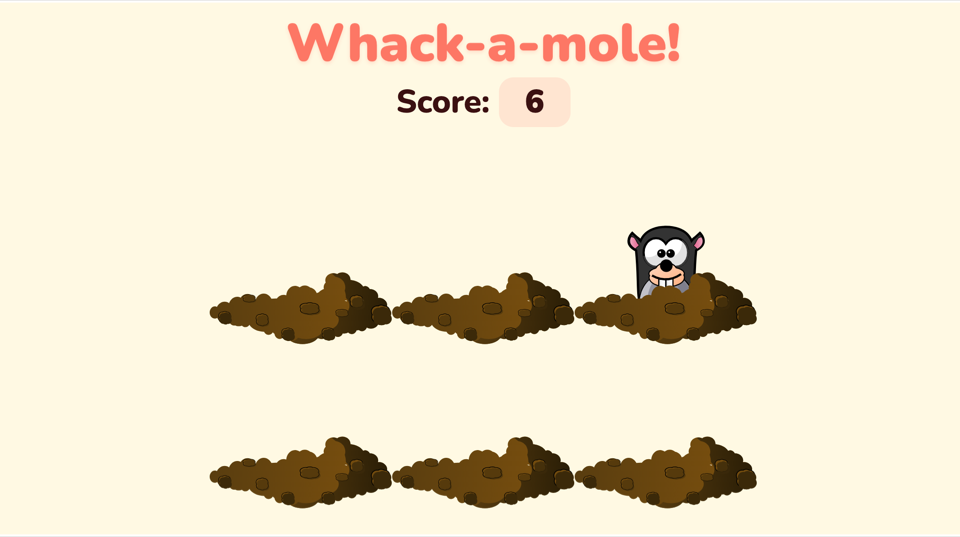
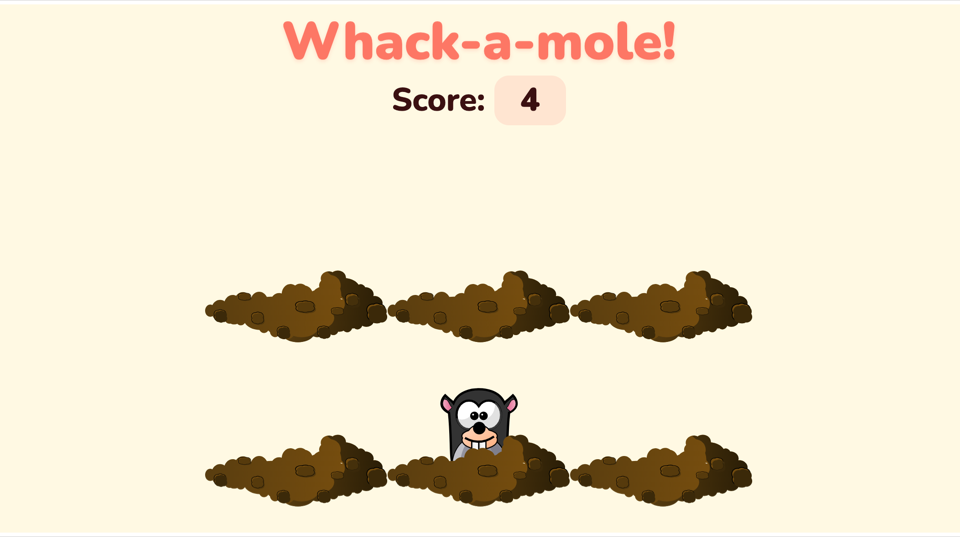
Keep your eyes on the six dirt mounds. Moles will pop up at random locations and remain visible for only a split second before retreats.
Click or Tap
Quick-click the mole's head on desktop, or tap directly on touch screens to register a hit. A successful hit adds points and forces the mole back down.
Beat the Clock
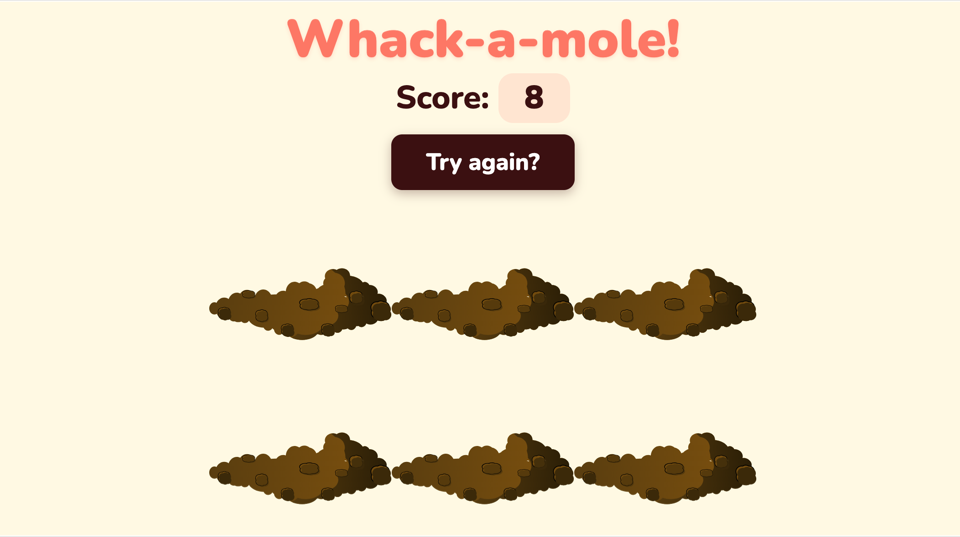
Keep up your momentum as the spawns speed up. Once the 30-second timer hits zero, the game ends, saving your final score to the high score board.
Focus on the center
Keep your cursor or finger resting near the center of the grid rather than chasing each mole to the outer corners. This minimizes travel distance and lets you respond to any mole spawn quickly.
Scan the whole screen
Avoid staring at a single hole waiting for a spawn. Keep a soft focus on the entire grid to catch movements in your peripheral vision.
Click with light touch
Do not rush or click wildly because missing a mole wastes time. Focus on making light, precise movements directly on the target.
Whack-A-Mole Player Handbook
Welcome to the official Whack-A-Mole training manual and strategic player guide! Whether you are clicking with a mouse on desktop or tapping directly on a mobile screen, this handbook is designed to improve your reaction speeds and board control.
In this handbook, we will explore the history of physical arcade machines, explain how the moles pop up, and share advanced tips on reaction mechanics. Read on to master the midway!
1. Origins of the Whack-a-Mole Cabinet
The original Whac-A-Mole cabinet was invented in Japan in 1975 by a popular amusement manufacturer. The game was initially named Mogura Tataki, which translates to mole hitting.
The following year, creative designers modified the machine for the American market. The game was licensed to midway operators who distributed the iconic cabinet to carnivals and amusement parks worldwide.
The physical machine relied on soft foam mallets to hit the moles as they popped up from the playfield. Players loved the satisfying feedback of hitting the targets, making it a staple of arcade halls.
The name Whack-A-Mole has since entered popular culture as a metaphor for a repetitive chore. It describes a situation where solving a single problem only leads to another similar one popping up elsewhere.
Our digital version transitions this classic arcade action onto your browser screen. It replaces the foam mallet with mouse clicks and screen taps, but preserves the original pressure of reacting to fast-spawning targets.
2. The Logic of Mole Spawns
The game controls how long a mole pops up using random time intervals. This means every single mole stays above ground for a slightly different length of time.
To keep you on your toes, the game randomizes which hole the mole will emerge from next. It also ensures that a mole never pops up in the exact same spot twice in a row.
When you click or tap a mole, the game registers your hit instantly. The game also checks to make sure every click is a valid hit, keeping the scoreboard fair for everyone.
Once you land a hit, the mole slides right back down into its hole. Your score increases by one, and the game updates the stats bar at the top of the page.
The game uses a smart mix of fast and slow delays to create a fun, random pace. This variation keeps the action exciting and tests your reflexes as you play.
3. Reflexes and Peripheral Visual Scanning
Winning at Whack-A-Mole is all about sharpening your reflexes and tactile arcade reaction speed. It takes a fraction of a second for your brain to spot a mole and send a signal to your hand.
To hit them as fast as possible, try keeping your cursor centered in the middle of the board between spawns. This keeps your hand at the perfect distance to reach any of the six holes quickly.
Try not to stare at just one hole waiting for a mole to appear. Instead, keep a relaxed focus on the entire board so you can catch any sudden movement immediately.
When you spot a mole rising in the corner of your eye, you can tap it instantly without wasting time. This little trick gives you a huge advantage and keeps your score climbing.
Unlike the heavy foam hammers used in the classic arcade machines, our digital version is light and easy on the wrists. This means you can focus entirely on speed and agility to beat your high score!
4. Glossary of Terms
Mallet
The soft foam hammer used to strike the rising moles on physical arcade machines. In our digital version, this tool is represented by your mouse cursor or finger taps.
Double Spawn
A high-speed gameplay moment where two moles emerge from different holes at the same time. Reacting to these dual targets requires rapid coordination and split-second decisions.
Bonk
A successful strike on a mole before it has a chance to hide back in its hole. Each clean bonk increases your score by one point and forces the target down.
Peep Rate
The speed at which moles rise and fall during a single gameplay session. The rate increases as the timer winds down to test your maximum reflexes.
Playfield
The board area containing the six dirt holes where the moles emerge. Keeping your focus centered on this field is essential for maintaining control.
Peripheral Scan
The visual strategy of keeping a broad focus on the entire grid instead of watching a single hole. This technique allows you to detect new spawns much faster.
Reaction Time
The split-second latency between a mole popping up and your hand clicking it. Reducing this delay is the key to earning a high score.
Carnival Midway
The bustling amusement area at a fair where Whack-A-Mole cabinets first rose to global popularity. These physical locations laid the groundwork for today's digital arcade classics.