Play Memory Cards Online Free
Flip tiles to discover hidden pairs across various board sizes.
Loading game...
About Memory Cards
Welcome to Memory Cards, the classic concentration card game brought to life with clean visuals and three grid sizes! Your goal is to flip over cards two at a time to find matching pairs. Unmatched cards flip back over, so you need to remember where each icon is hiding. Every correct pair awards ten points to your active score.
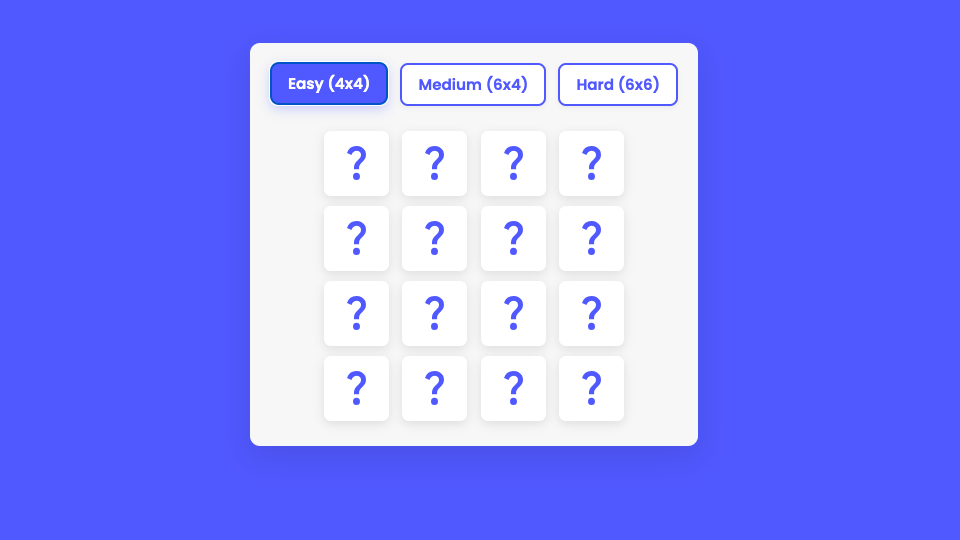
- 4x4 Grid: A quick sixteen-card layout, great for a fast warm-up round or a casual match.
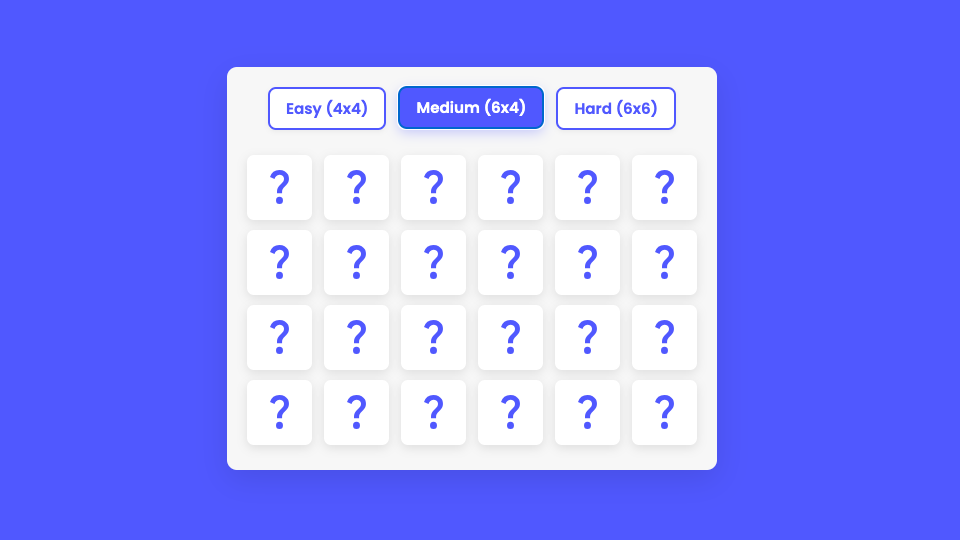
- 4x6 Grid: A balanced twenty-four card layout that asks you to track more positions at once.
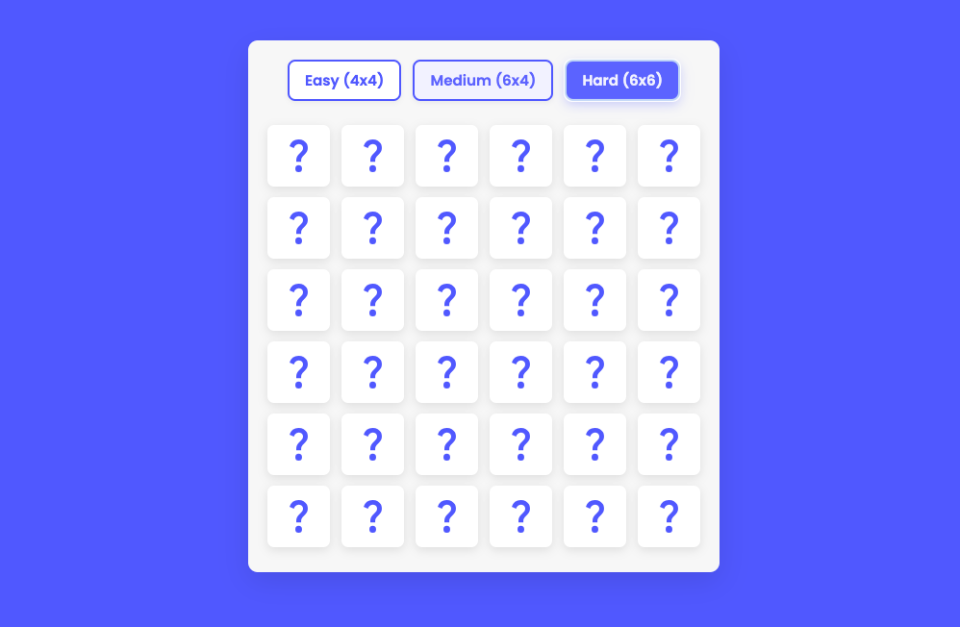
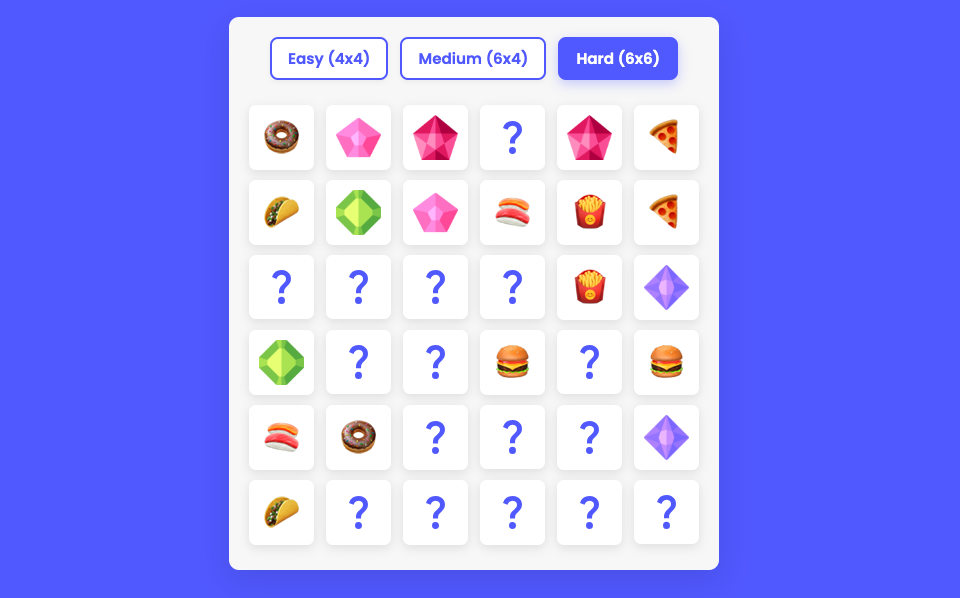
- 6x6 Grid: The full thirty-six card challenge, demanding sharp focus and strong spatial memory.
Choose your grid, flip those cards, and clear the board as fast as you can!
How to Play
Flip Cards
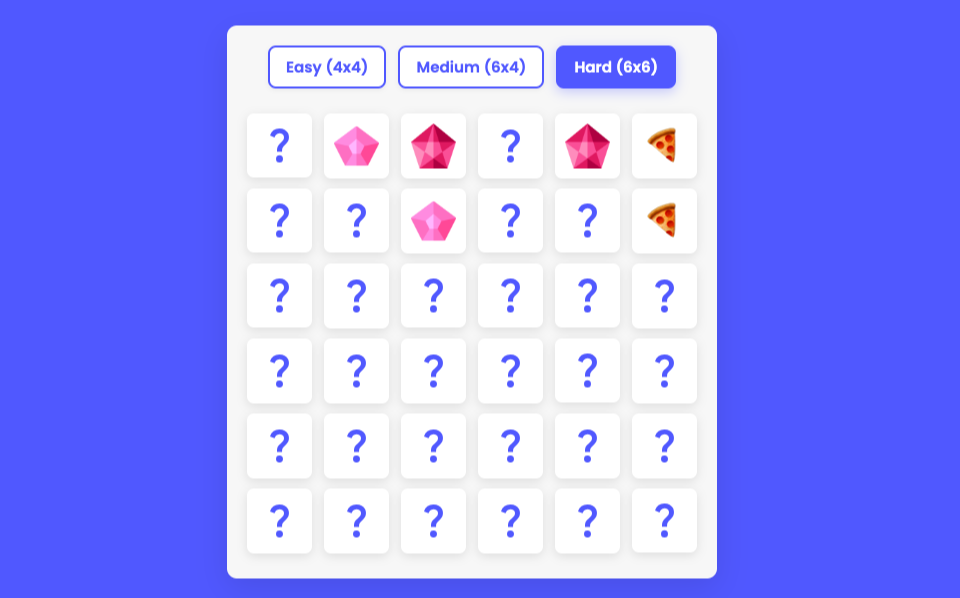
Click on any face-down card to reveal the icon underneath.
Find Pair
Click a second card to see if the icons match.
Match or Reset
Matched pairs stay visible and award ten points. Unmatched cards flip back after a short delay.
Clear Board
Continue flipping until every pair on the board has been found.
Row Scan Method
Flip cards in a systematic row-by-row pattern on your first pass. This builds a mental map of where each icon is located before you start pairing.
Cluster Focus
Group your attempts in one area of the board at a time. Concentrating on a smaller region reduces the number of icons you need to actively remember.
Speed vs. Accuracy
On smaller grids, fast random flipping can work. On the 6x6 board, slow and deliberate scanning always outperforms guessing.
Memory Cards Player Handbook
This strategic training manual details the math, history, and cognitive methods for mastering Memory Cards. You will learn Edo-period matching roots, coordinate-based mapping systems, and exact double-flip priorities.
1. Historic Roots and Grid Configurations
Did you know that the matching card game Concentration evolved from an ancient Japanese pastime known as Shinkei-suijaku? Literally translating to "nervous breakdown" because of the intense mental focus required, Shinkei-suijaku is the traditional Japanese name for Concentration. Long ago, players used beautifully hand-painted clam shells called Kai-awase instead of paper cards to match pairs.
This popular game was eventually introduced to Western countries under the name Pelmanism, which was used for memory exercises. These early variations laid the foundation for the fun spatial memory concentration and visual memory games we play today.
Our digital version lets you pick the perfect layout for your current skill level. You can choose a quick sixteen-card grid to warm up or challenge yourself with the full thirty-six-card layout.
Each correct pair you match awards ten points directly to your active game score. Your total score updates instantly in the navigation bar as you clear the board.
2. The Coordinate Mapping System
To stack up high scores, try mentally labeling the grid slots using simple numbers like rows and columns. Giving each card a physical coordinate helps you remember locations much faster than just staring at the pictures.
When you start a new board, try flipping cards in a tidy row-by-row pattern starting from the top-left corner. This structured search pattern takes away the guesswork and stops you from wasting flips on random cards.
Each time you reveal a new icon, quickly say its name and position silently in your mind. Making a quick verbal note is a great trick that anchors the card position instantly in your short-term memory.
Try to look at each revealed card face for a brief second before you tap the next one. Giving your eyes that tiny moment to focus gives your brain the time it needs to save the layout coordinate.
Keep your eyes focused on the card area and try to block out any other items on your screen. Keeping your attention centered on the cards is the easiest way to prevent yourself from losing track of the grid layout.
3. Dual-Card Turn Timing and Guess Order
The best trick for matching cards is to flip a card you already know first on your turn. This smart move ensures you only have to guess on your second flip instead of both.
Flipping an unknown card first forces you to make two guesses in a row, which makes mistakes much more likely. Incorrect flips make the cards shake and eat up valuable seconds on your game timer.
Your game timer starts running the moment you flip your first card and stops when you clear the last pair. Switching difficulty settings resets your score to zero and lets you start a fresh timer.
Watching your clear time is the perfect way to see how much your memory skills are improving. The ultimate goal is to clear the challenging thirty-six card board in less than one minute.
Playing on the larger grids is a fun exercise that will naturally boost your memory power and concentration. Keep your flips structured, count your rows, and see if you can set a new personal best score.
4. Fun ways to test your skills
The Perfect Run
Try to clear the sixteen-card grid without making more than three mistakes along the way. This requires you to focus on your scanning pattern right from your first click.
Tidy Sweeper
Force yourself to flip cards only in a strict row-by-row order from top to bottom. This systematic approach takes away all random guessing and tests your pure recall speed.
Speed Demon
See if you can clear the twenty-four card layout in less than thirty seconds. You will need to move fast and trust your first instincts without pausing.
The Clean Slate
Clear the thirty-six card grid using less than twenty total incorrect flips. Keeping your mismatch count this low requires excellent mental map organization.
Zone Master
Divide the grid in half and completely clear one side of the board before matching a single card on the other side. This self-imposed rule forces you to compartmentalize positions and ignore tempting matches elsewhere.
Double Take
Avoid making two incorrect guesses in a row at any point during a single round. If you miss a match, you must successfully clear a pair on your very next turn.