Play Snake Game Online Free
Guide your growing serpent toward food while dodging outer boundaries.
Loading game...
About Snake Game
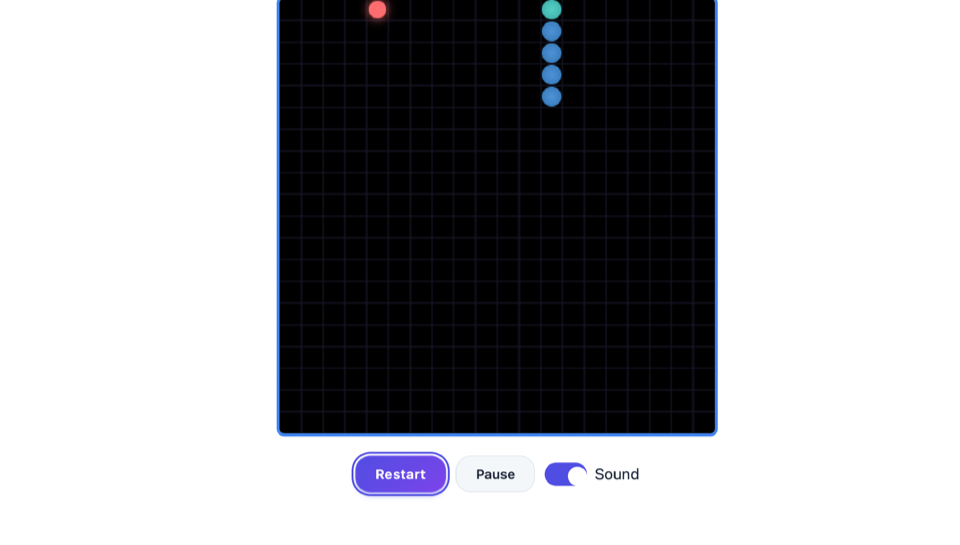
Welcome to the ultimate retro arcade challenge! Snake Game is one of the most recognizable and beloved gaming concepts in history, requiring quick reflexes and spatial planning. In this premium version, you guide a hungry snake around a grid canvas to consume delicious red food items. With each item eaten, your snake grows longer, and your score increases by ten points. Watch your stats update live in the top bar as you try to set a new personal record!
As you play, the grid mechanics and speed dynamics scale up to test your skills:
- Starting Pace: The game begins at a manageable speed, allowing you to get comfortable with coordinates and plan your path.
- Speed Scaling: Each piece of food consumed increases the game speed slightly, presenting a higher challenge as your length grows.
- Tail Maneuvers: You must carefully loop and pack your tail sections to keep the center of the grid open for movement.
Press WASD to change direction, spacebar to pause, and see how long you can survive before hitting a wall or biting your own tail!
How to Play
Control Movement
Use the WASD keys (or arrow keys) on your keyboard to navigate the snake around the grid. Press Space to pause or resume your game session.
Consume Food
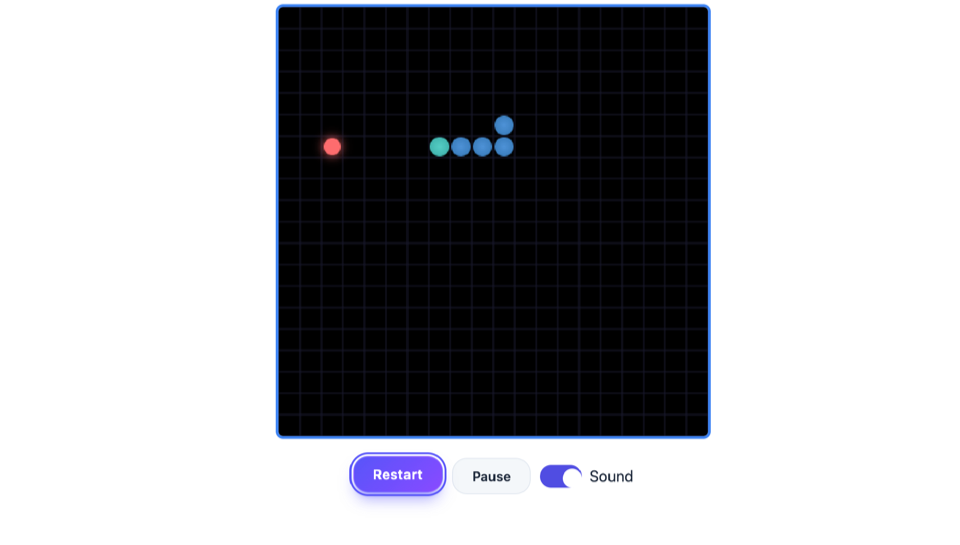
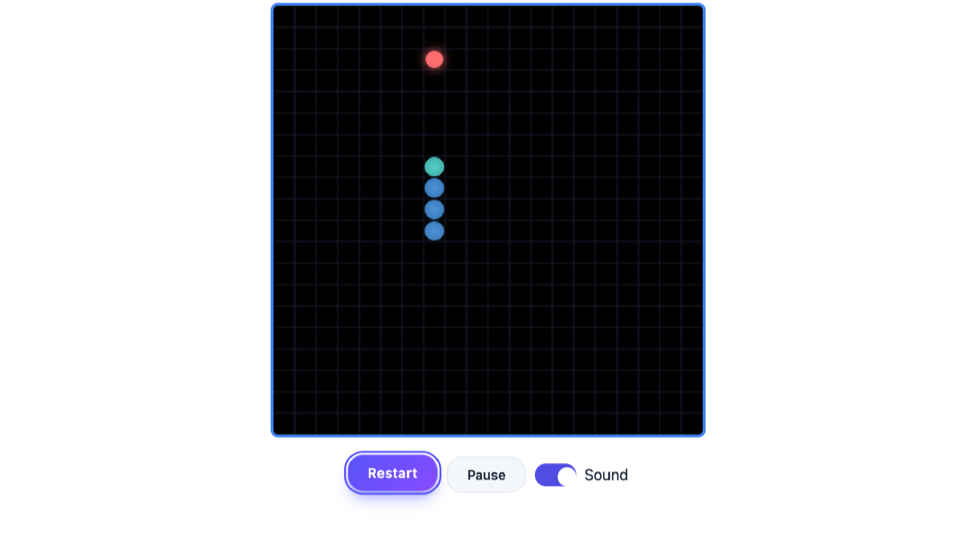
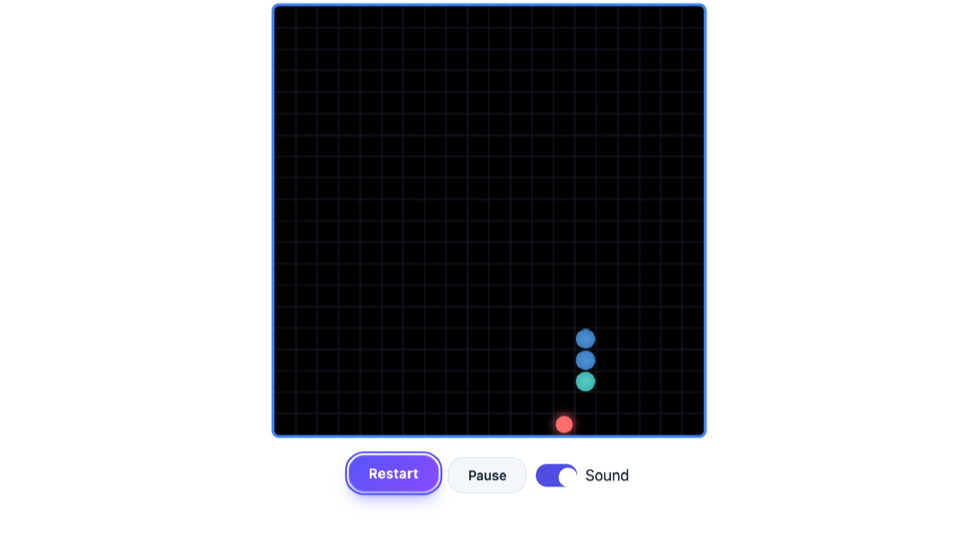
Guide the snake's head to the red food items to eat them. Each item eaten grows your length and awards ten points.
Speed Increases
The game pace increases slightly with each item of food you consume. You must react faster as your tail becomes longer and more difficult to navigate.
Avoid Collisions
Make sure you do not hit the outer wall boundaries of the canvas. You must also avoid colliding with your own growing tail to keep playing.
Wall Hugging
Ride along the outer walls of the grid when your tail grows long. This pathing strategy leaves the center open and maximizes your movement options.
Tail Packing
Loop your snake in a tight zigzag pattern as you grow. This packing technique keeps your body compressed and prevents you from trapping yourself.
Open Space
Avoid rushing directly toward food items. You should always prioritize leaving a clear path back to the open grid before making your turn.
Snake Game Player Handbook
Welcome to the official strategy manual for the classic Snake Game, a beloved arcade staple that has tested coordination and spatial pathfinding for generations. Whether you are a beginner looking to understand the core mechanics of movement or a competitive enthusiast aiming to completely fill the screen with tail loops, this handbook is designed to optimize your movement and strategy.
In this manual, we will explore the historical arcade origins of the game, explain how the snake moves across the board, and share pro strategies for managing tight spaces. By mastering simple path planning and corner turns, you will consistently secure massive high scores, beat your personal records, and navigate the grid like a pro.
1. The Evolution of the Serpent: From Arcade Lines to Mobile Screens
The history of Snake begins in the early arcade era of 1976 with a monochrome coin-operated game called Blockade, designed by Gremlin Industries. In this multiplayer game, two players controlled moving lines that left solid trails behind them, attempting to trap the opponent while avoiding crashes.
Single-player variations emerged shortly after, with games like Nibbler in 1982 adding solid maze walls and score points for eating items in a grid. The genre was revolutionized in 1997 when Nokia design engineer Taneli Armanto programmed a mobile version of the game for the monochrome Nokia 6110 handset, which introduced casual gaming to the global public.
Pre-installed on millions of mobile phones, this simple monochrome game became a massive pop culture phenomenon and paved the way for modern mobile gaming. Our modern browser version honors this classic gameplay, featuring smooth vector rendering on a canvas and responsive keyboard controls that feel incredibly fluid.
2. The Mechanics of Grid Movement: Ticks and Coordinate Vectors
Under the hood, the game runs on a simple grid made of columns and rows. The snake is tracked as a chain of points, where the first point is the head and the rest follow behind as the tail.
Every split second, the game moves the snake's head forward in the direction you are steering. If you run into a wall or accidentally hit your own tail, the game ends immediately.
When you move safely, a new head segment is added at the front and the end of the tail disappears. If you eat the food, your tail grows longer and the snake begins to move slightly faster.
3. Strategic Pathfinding: Mastering Tail Packing and Pockets
As your tail gets longer, you will need to plan your moves ahead of time instead of just reacting. The best way to survive is tail packing, which means folding your snake back and forth in tight rows to save space.
This trick keeps the rest of the board open so you do not accidentally trap yourself in a corner. Try hugging the walls first and spiraling inward, making sure you always leave a clear path to escape.
Also, try not to rush blindly toward food if it spawns in a risky spot near your tail. Keeping your path safe is always more important than scoring a quick point, as it helps you survive much longer.
4. Cognitive Training: Developing Spatial Awareness
Playing the Snake Game is not just a lot of fun, but it is also a great workout for your brain. It forces you to keep track of the whole board, planning your path while the game speeds up.
This constant focus is fantastic for improving your reflexes and coordination under pressure. Playing a few rounds regularly is a fun way to sharpen your focus and visual tracking skills.
5. Glossary of Snake Terms
Playing Board
The grid area where all the action takes place. The snake and food items are positioned within this space during play.
Collision
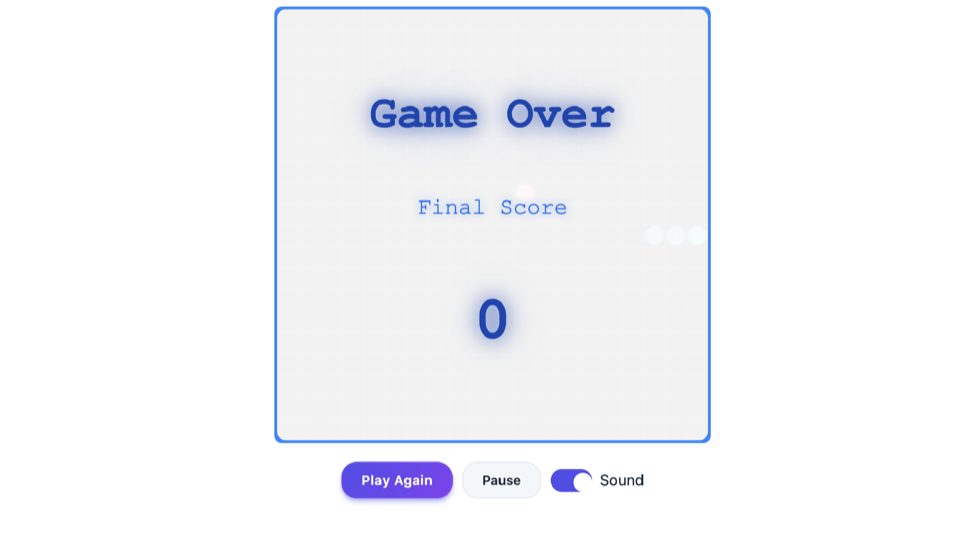
The moment the snake head touches a wall or its own tail. Running into anything ends the game immediately.
Food
A tasty treat that appears in random spots on the board. Eating food increases your score and makes your tail grow longer.
Continuous Slide
The automatic, self-propelled movement of the snake in its current direction. You do not need to hold down buttons to keep moving forward.
Tail Packing
An advanced movement technique where loops are folded tightly against each other. This packing preserves maximum open grid space for future maneuvers.
Game Speed
The speed at which the snake moves across the board. The movement speed increases as you eat more food to test your reflexes.
Steering Input
The control mechanism that registers your keyboard steering direction immediately. This ensures your turns are responsive and smooth.
Solid Walls
The border of the screen that you must avoid hitting during play. Running into these boundaries results in an instant crash.