Play Block Stacker Online Free
Arrange falling blocks and clear horizontal rows before space runs out.
Loading game...
About Block Stacker
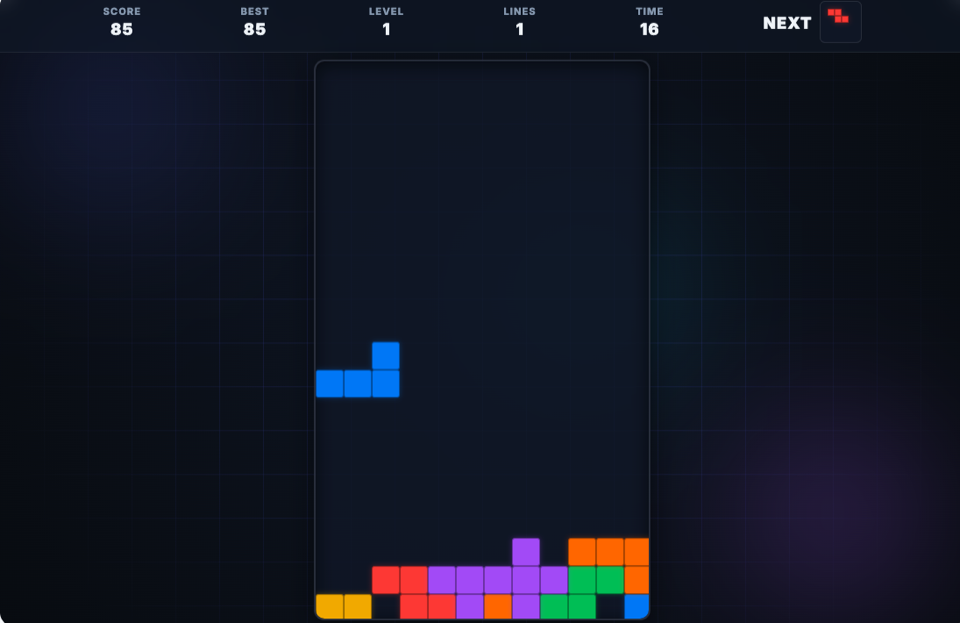
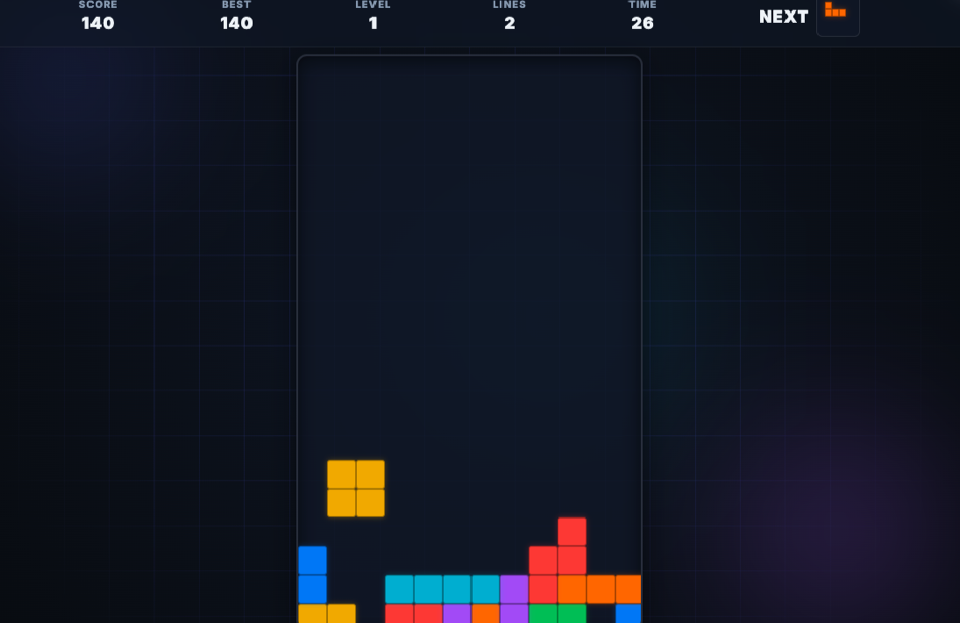
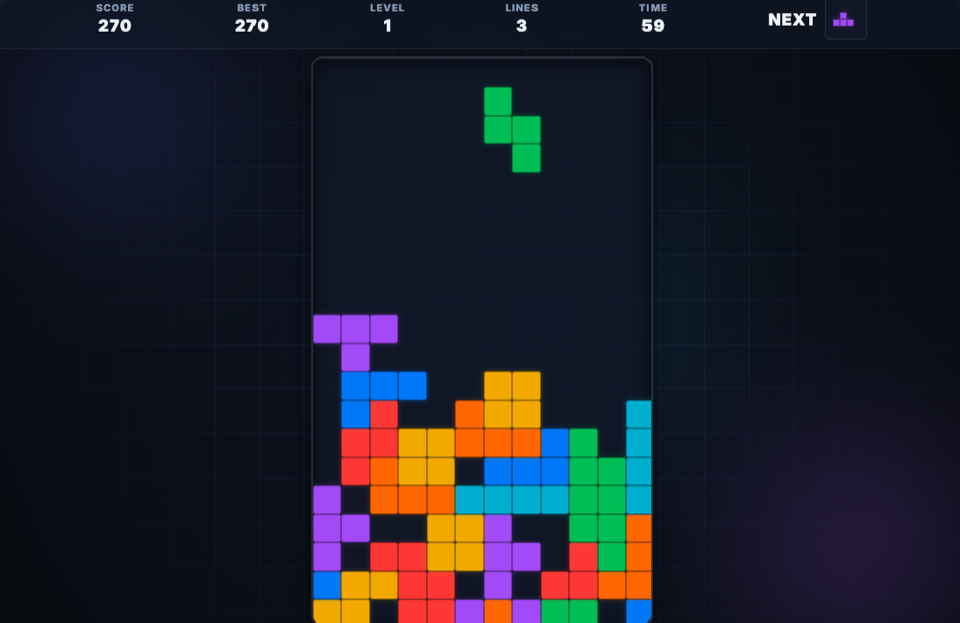
Welcome to Block Stacker, a classic block-fitting puzzle game where you arrange falling shapes to clear complete rows! Your objective is to rotate and slide incoming tetromino pieces as they drop from the sky to fill the horizontal rows on the grid. Every time you fill a row completely, it vanishes from the grid to score points and give you more room to stack new pieces.
The falling speed of the blocks increases as you clear more rows and advance to higher levels. This speed progression demands fast reflexes and forward planning to keep your stack flat and avoid reaching the top of the grid. You can control the pieces using your keyboard on desktop or utilize tap buttons on mobile devices. Drop the blocks, plan your stack, and see how many rows you can clear!


How to Play
Move Blocks
Press the left and right arrow keys or WASD keys to slide falling shapes horizontally across the grid.
Rotate Shapes
Press the up arrow or W key to rotate the current shape and fit it into narrow gaps.
Drop Faster
Hold the down arrow or S key to soft-drop the block and place it on the stack quickly.
Clear Rows
Fill any horizontal row completely with blocks to clear it from the screen and earn points.
Flat Stacking
Try to keep the top of your stack as flat as possible to avoid leaving unreachable empty spaces.
Next Piece Preview
Check the next block display area to plan where you will position the upcoming shapes.
Line Clear Setup
Leave a single column open on one side of the grid to set up massive multi-line clears.
Block Stacker Player Handbook
This handbook details the strategic mechanics and historic legacy of Block Stacker to help you maximize your score. You will learn the exact math of line multipliers, geometric placement rules, and reaction timing.
1. The Origin of Falling Shape Puzzles
In 1984, researcher Alexey Pajitnov created the original version of Tetris on an Electronika 60 computer in Moscow. He utilized text brackets to draw the blocks since early machines lacked graphics capabilities.
The game achieved global success in 1989 when it launched as the pack-in game for the Nintendo Game Boy. This portable release sold millions of copies and proved that simple spatial logic is universally engaging.
The core rules remain identical in our modern version to preserve the original challenge for players today. You must arrange descending blocks on a grid that is twelve columns wide and twenty rows high.
The pieces descend from the center of the top row where the spawn zone is located. Keeping this spawn zone clear of blocks is the only way to avoid an instant game over.
2. Geometric Placement and Flat Stacking Strategy
Each of the seven block shapes requires a specific positioning strategy to prevent empty spaces in your stack. The straight shape and the square shape are best used to fill deep flat sections.
The L-shapes and J-shapes are highly versatile for filling corners and vertical gaps on the sides. You must rotate these pieces early in their descent to ensure they slide cleanly into position.
The S-shapes and Z-shapes are the most difficult to place and often create empty pockets if stacked improperly. You should slide these zig-zag pieces into shallow steps along your stack base.
Maintaining a flat stack surface is the absolute best way to ensure any incoming piece has a valid landing spot. A bumpy stack with uneven columns restricts your options and quickly leads to errors.
Always use the next-piece preview box to plan your target slot before the current block lands. This forward planning is crucial for maintaining a level building platform under pressure.
3. Line Multipliers and Speed Management
Clearing a single row awards a basic score, but clearing multiple rows simultaneously provides a massive point multiplier. A double clear triples the base score, while a triple clear multiplies the points by six.
The maximum four-row clear awards twelve times the base points and is the most efficient way to score. To achieve this, you must stack eleven columns high while leaving a single open lane on either side.
Every ten lines you clear increases your speed level and forces the blocks to fall faster. Higher speed levels reduce your decision time and require instant reflex adjustments.
When blocks fall at maximum speed, you must slide pieces horizontally before they lock onto the stack. Using quick, precise taps is much safer than holding down the directional keys.
Managing the balance between greedy high-score setups and safe line clears is the key to surviving high levels. Prioritize clearing single lines to lower your stack if it rises past the halfway mark.
4. Glossary of Terms
Stacking Shape
The block arrangement of four squares that falls from the top of the grid. There are seven unique shapes that you must rotate and place.
Line Clear
The scoring action that occurs when you fill a horizontal row completely with blocks. The filled row disappears and all blocks above it slide down.
Next-Piece Preview
The display area showing the next falling block that will enter the board. Watching this preview helps you plan where to stack future shapes.
Four-Row Clear
The highest-scoring move where you clear four horizontal rows simultaneously with a long straight block. Preparing your stack for this clear yields massive bonus points.
Open Lane
The single vertical column left empty to prepare for a four-row clear. Keeping a clean lane open is key to scoring large bonuses.
Speed Levels
The difficulty stages that increase as you clear more lines. Each new level makes the blocks drop faster to test your reaction speed.
Stack Base
The flat arrangement of blocks built at the bottom of the grid. Maintaining a level base gives you the best chances for placing incoming shapes.
Fast Drop
The action of sliding a block down the board quickly when you have already chosen its spot. Dropping pieces fast saves time and helps keep your stack under control.