Play TGC Hockey Online Free
Protect your net and strike neon pucks past the computer goalie.
Loading game...
About TGC Hockey
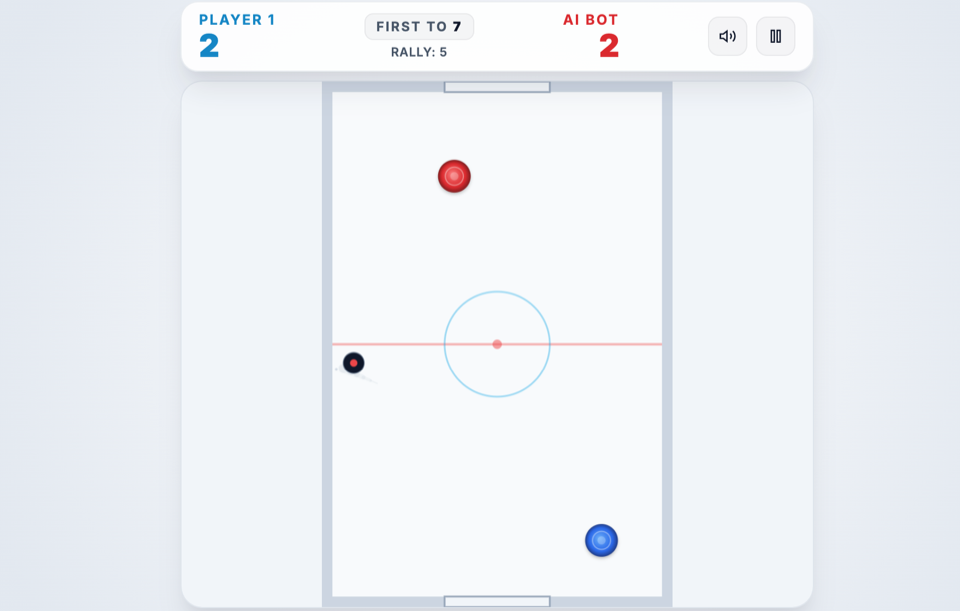
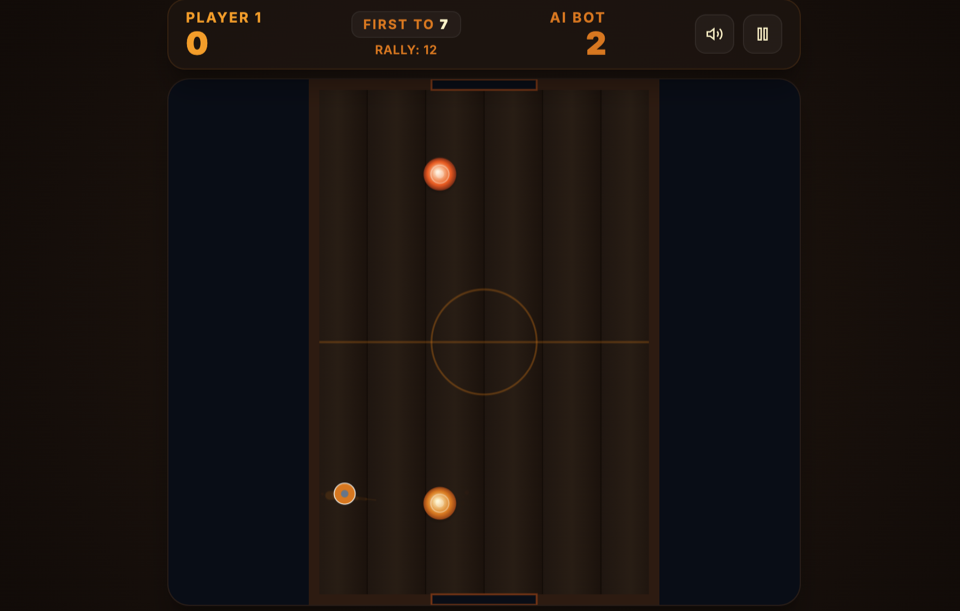
Welcome to TGC Hockey, our highly responsive digital simulation of the classic arcade air hockey game! Designed with realistic physics, the mallet and puck follow standard momentum and elastic collision equations to recreate a true tabletop feel. You can customize your match settings to play solo against the automated AI bot (with selectable difficulties ranging from Easy to Pro) or switch to Local 2-Player mode to play head-to-head with a friend on the same screen.
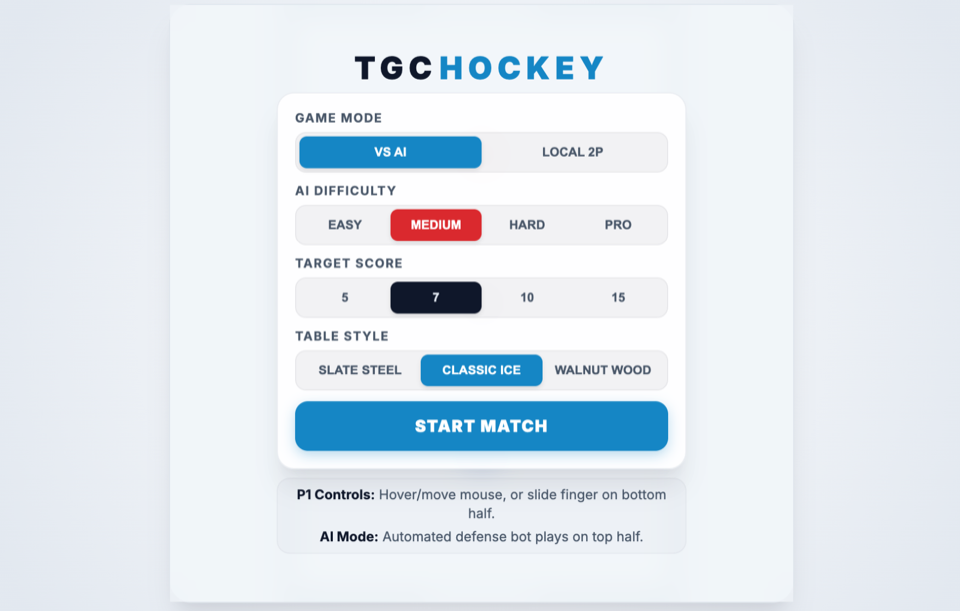
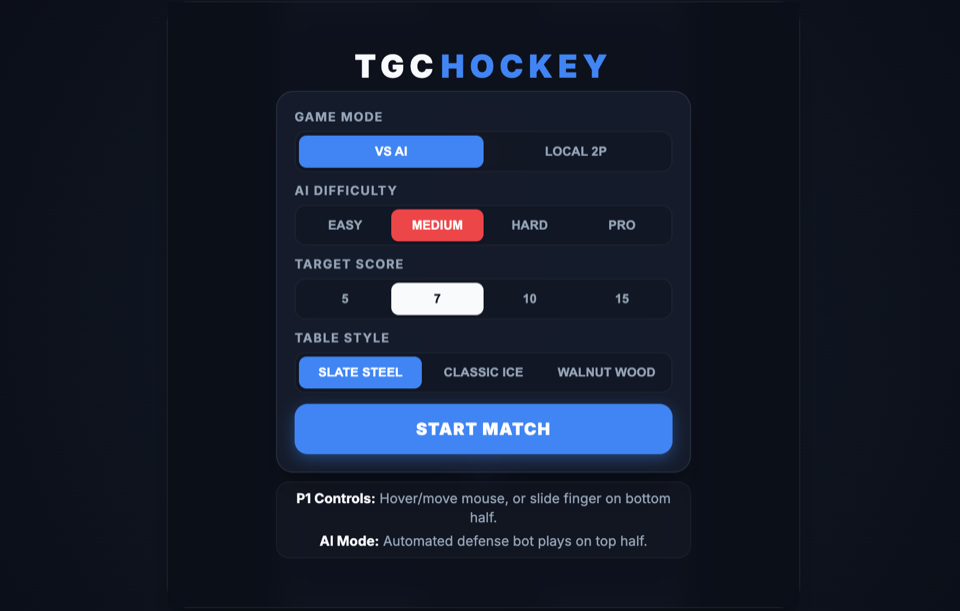
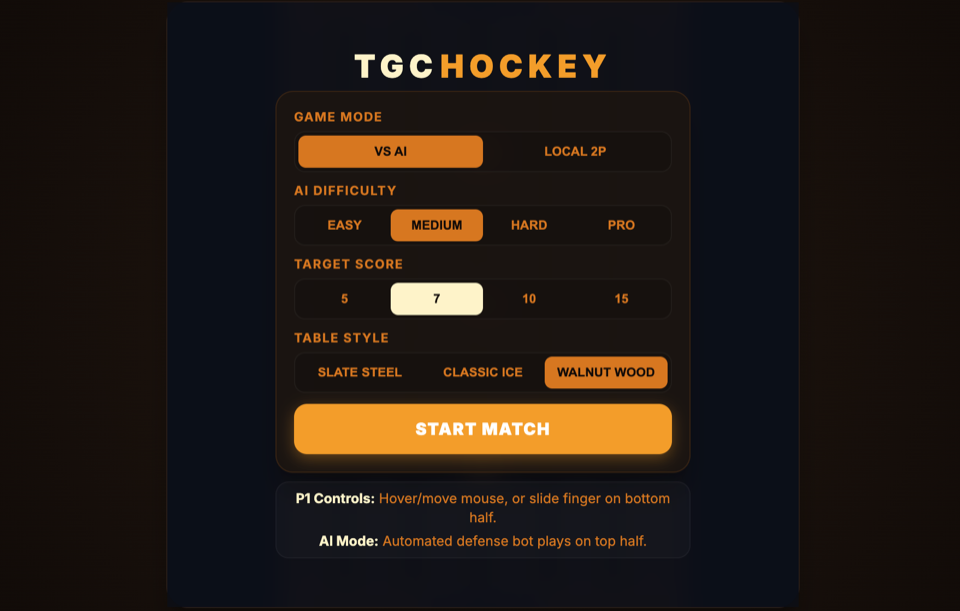
Every goal you score and match you win updates your session stats in real-time. Choose from three visual styles (Slate Steel, Classic Ice, Walnut Wood) to personalize your table and get ready to strike the puck!
How to Play
Configure Match Settings
Select either a solo match against the AI bot or a local two-player game, then select your difficulty level and target score.
Control Your Mallet
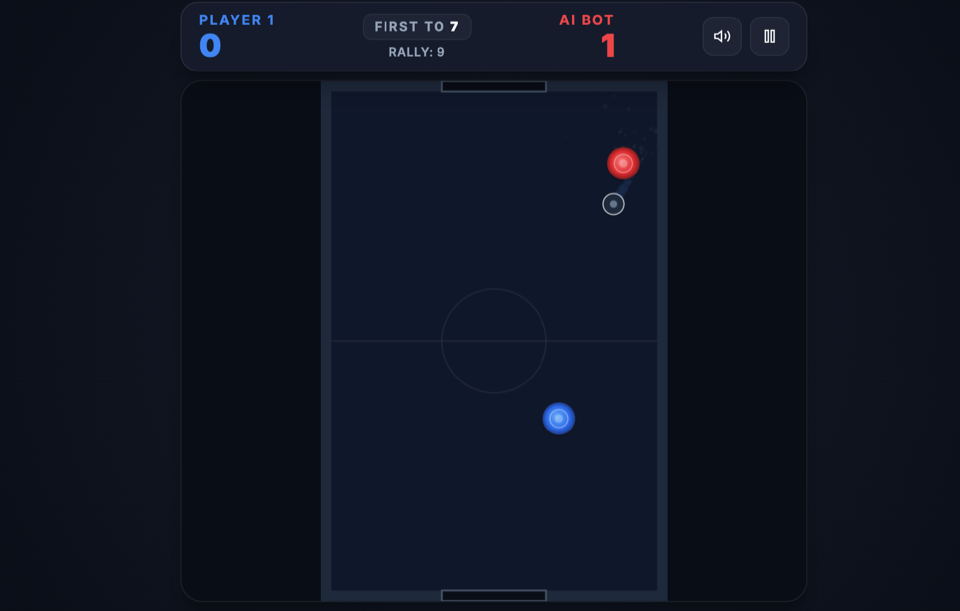
Drag your cursor or slide your finger across your half of the table to position your mallet.
Strike the Puck
Hit the puck with sudden mallet movements to accelerate it toward the opponent's goal line.
Defend the Goal
Position your mallet in the center of your goal mouth to block incoming shots from the opponent.
Position for safety
Keep your mallet slightly in front of your net rather than chasing the puck. This maximizes your defensive cover and prevents accidental self-goals.
Use wall rebounds
Bank your shots off the side rails to alter the puck's trajectory. This makes your shots unpredictable and helps bypass the opponent's defenses.
Vary strike speeds
Mix slow taps with rapid smashes to disrupt your opponent's timing. Sudden changes in puck velocity make blocking much more difficult.
TGC Hockey Player Handbook
This handbook covers the historic legacy, physics, and gameplay tactics of TGC Hockey to help you score more goals. You will learn mallet positioning strategies, rail deflection geometry, and defense patterns.
By learning these fast table tricks, you can easily control the puck and beat the computer bot. Let's start the match!
1. The Origins of Table Hockey
Did you know that air hockey was created in 1969 by a group of engineers at Brunswick Billiards? They originally wanted to build a game table that featured a completely frictionless surface.
The design team created a special prototype that blew air upward through thousands of tiny holes in the table bed. This air layer allowed a light plastic disc to float and glide around with almost zero resistance.
The designers soon added goals, paddles, and a puck to turn their air table into the fast-paced game we play today. The sport became a huge arcade hit in the 1970s and quickly spread to game rooms worldwide.
Learning how this game came to be shows how a simple idea can turn into a classic table sport. Today, mastering standard air hockey rules remains a fantastic way to test your reflexes and share a fun match with friends.
2. The Physics of Elastic Collisions
The fast-paced gameplay of air hockey relies on basic physics and the exchange of kinetic energy. When your paddle hits the puck, the speed transfers from your hand straight to the disc.
In this game, the heavy mallet is designed to weigh five times more than the lightweight plastic puck. This difference in mass makes the puck shoot away at high speeds when struck.
The table rails act as elastic boundaries that bounce the puck away without draining its momentum. The puck will bounce off the cushion at the exact same angle it arrived.
Anticipating these bounce paths lets you position your mallet ahead of time to block fast shots. Reacting early is the key to stopping high-speed attacks.
3. Mallet Velocity and Deflection Rates
Winning matches on this fast table requires smart positioning and careful defensive habits. A common mistake is chasing the puck into corners, which leaves your own goal wide open.
Instead, try keeping your mallet centered in front of your net to block incoming shots. Moving outward in a straight line gives you the safest angle to clear the puck.
When you decide to attack, swing your mallet with a quick, sudden snap to send the puck flying at maximum speed. Angled shots that bank off the side rails are great for bypassing a blocking defender.
Balancing a tight defense with quick rail shots is the best way to score points against the computer. Keep your hand steady, watch the puck, and enjoy the game!
4. Glossary of Terms
Mallet
The handheld circular paddle used by players to strike the puck and defend their goal. The mallet is much heavier than the puck to allow for fast hits.
Puck
The lightweight circular disc that glides across the table. It floats on a cushion of air to minimize friction during play.
Goal
The wide opening at each end of the table that players must defend. Scoring seven times in this opening wins the match.
Cushion
The raised border rails that surround the playing table. The puck bounces off these rails with near-perfect elastic reflection.
Rally
A continuous sequence of strikes and blocks back and forth between the two players. Long rallies test your concentration and reflexes.
Friction
The natural resistance that slowly reduces the speed of a sliding puck. A low level of friction keeps the game fast and exciting.
Velocity
The speed and direction of the puck as it glides across the table. Hitting the puck with a faster mallet strike increases its velocity.
Deflection
The act of hitting the puck at an angle to alter its trajectory. Deflection is crucial for banking shots off side cushions.